
Department of Mechanical Engineering
Dr. Deepak Ranjan Biswal
HOD
HOD’s Message
ABOUT
Vision
Mission
PROGRAM EDUCATIONAL OBJECTIVES (PEOs)
-
PEO1
Apply solid foundation in Mechanical Engineering principles to solve complex engineering problems, adapting to evolving technologies and industry needs. -
PEO2
Exhibit effective leadership, teamwork, and communication skills, enabling to collaborate and convey ideas across multidisciplinary settings. -
PEO3
Engage in continuous learning and professional development, staying abreast of ideas of innovation, invention, higher study and entrepreneurship. -
PEO4
Demonstrate a commitment to ethical practices, contributing to sustainable solutions and positively influencing communities through responsible engineering practices.
PROGRAM OUTCOMES
(POs)
-
PO1
Engineering Knowledge: Apply knowledge of mathematics, natural science, computing, engineering fundamentals and an engineering specialization to develop to the solution of complex engineering problems. -
PO2
Problem Analysis: Identify, formulate, review research literature and analyze complex engineering problems reaching substantiated conclusions with consideration for sustainable development. -
PO3
Design/Development of Solutions: Design creative solutions for complex engineering problems and design/develop tems/components/processes to meet identified needs with consideration for the public health and safety, whole-life cost, net zero carbon, culture, society and environment as required. -
PO4
Conduct Investigations of Complex Problems: Conduct investigations of complex engineering problems using research-based knowledge including design of experiments, modelling, analysis. -
PO5
Engineering Tool Usage: Create, select and apply appropriate techniques, resources and modern engineering. -
PO6
The Engineer and The World: Analyze and evaluate societal and environmental aspects while solving complex engineering problems for its impact on sustainability with reference to economy, health, safety, legal framework, culture and environment. -
PO7
Ethics: Apply ethical principles and commit to professional ethics, human values, diversity and inclusion; adhere to national. -
PO8
Individual and Collaborative Team work: Function effectively as an individual, and as a member or leader in diverse/multi-disciplinary teams. -
PO9
Communication: Communicate effectively and inclusively within the engineering community and society at large, such as being able to comprehend and write effective reports and design documentation, make effective presentations considering cultural, language, and learning differences. -
PO10
Project Management and Finance: Apply knowledge and understanding of engineering management principles and economic decision-making and apply these to one’s own work, as a member and leader in a team, and to manage projects and in multidisciplinary environments. -
PO11
Life-Long Learning: Recognize the need for, and have the preparation and ability for
i) Independent and life-long learning
ii) Adaptability to new and emerging technologies.
iii) Critical thinking in the broadest context of technological change.
PROGRAMME SPECIFIC OUTCOMES
(PSOs)
-
PSO1
Analyze, design and develop machining systems to solve the engineering problems by integration thermal, design and manufacturing domains of mechanical engineering -
PSO2
Adopt a multidisciplinary approach to solve real-world industrial problems. -
PSO3
To achieve ability to gather and synthesise engineering data with basic knowledge of engineering and prepare students for successful career in industry, while generating thirst for knowledge and lifelong learning.
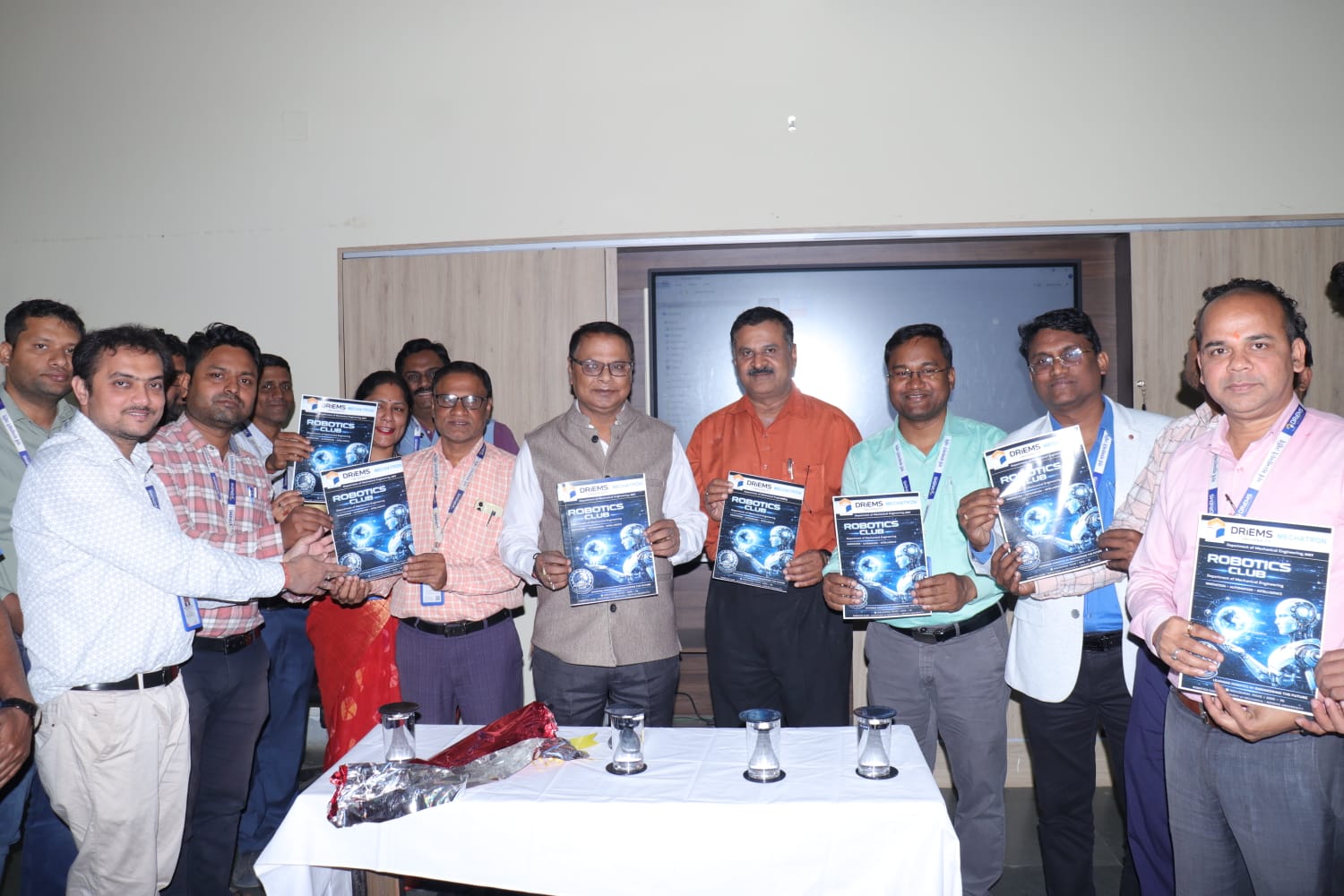
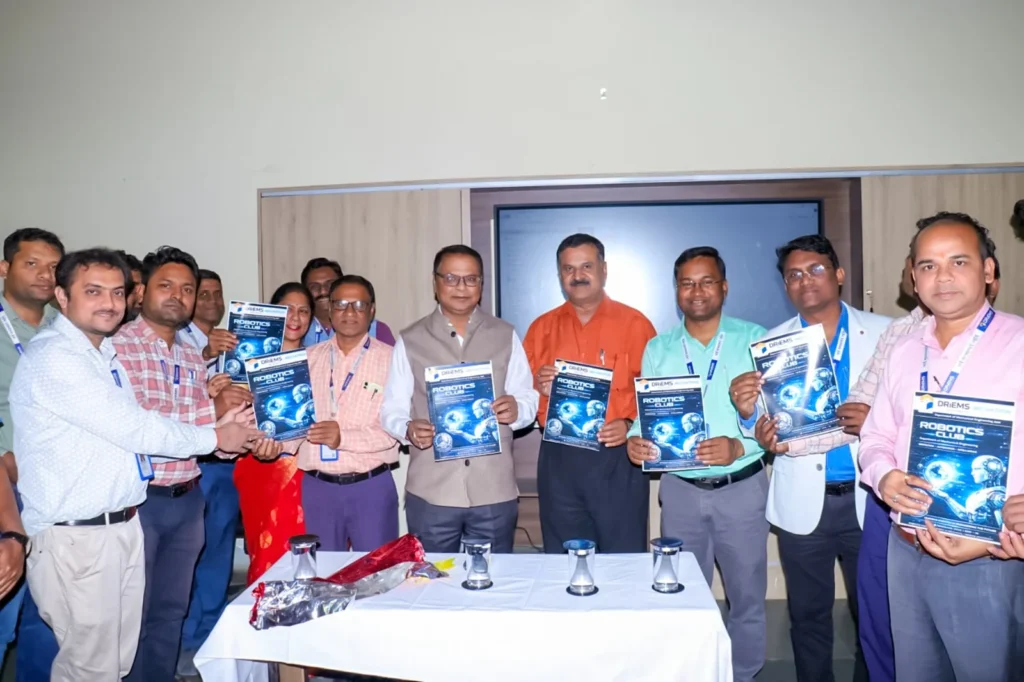
Robotics Club
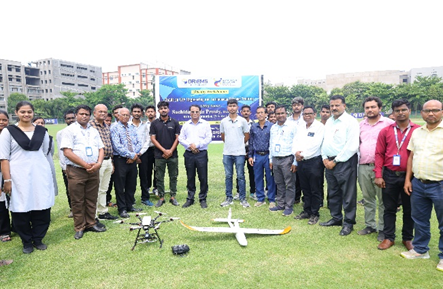
The Robotics Club of DRIEMS University, under the School of Engineering and Technology, Department of Mechanical Engineering, is a student-driven platform dedicated to promoting innovation, creativity, and technical excellence in robotics, automation, and intelligent systems. The club aims to inspire students to explore emerging technologies through hands-on learning, practical projects, workshops, and technical events.
The club provides opportunities for students to design, develop, program, and fabricate robotic systems using modern tools and technologies. It encourages interdisciplinary collaboration among students from Mechanical, Electronics, Computer Science, Electrical, and related disciplines, fostering teamwork and problem-solving skills.